Cooking with wine
Substitute for White Wine in Cooking: Ratios by Dish
By the editorial team · Updated 2026-11-25 · Every number linked to its source
Quick answer. The most dependable substitute for white wine in cooking is broth plus a little acid: America's Test Kitchen uses 1/2 cup broth with 1 teaspoon wine vinegar or lemon juice for every 1/2 cup of wine 1. If alcohol is fine, dry vermouth swaps in equal amounts 3.
White wine substitute calculator
Enter how much wine your recipe calls for and pick a substitute; the calculator returns the amounts of each ingredient and notes when to add the acid.
Want it on paper? The Cooking Wine Cheat Sheet has every dish, wine style and substitute on printable pages.
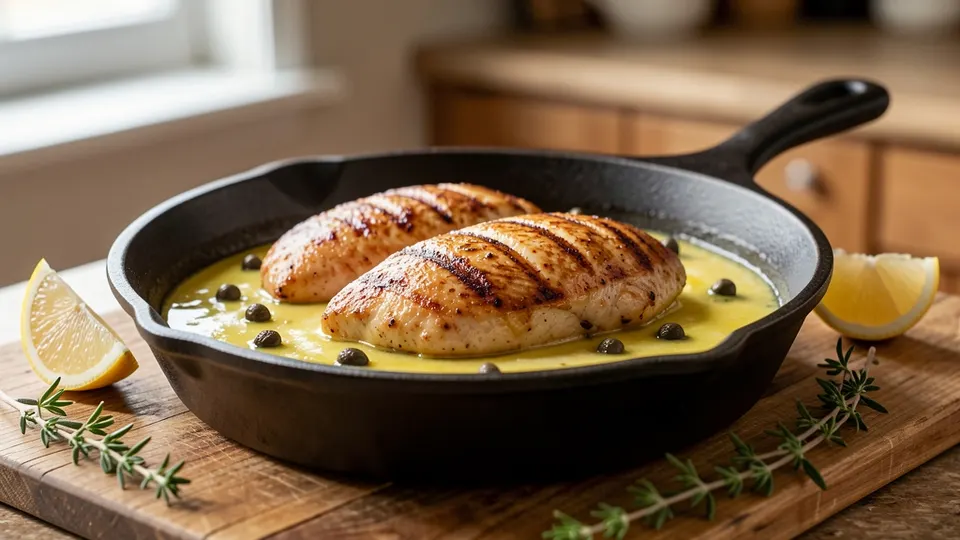
Whether you've run out of wine, cook for someone who avoids alcohol, or simply don't keep it in the house, a good substitute for white wine in cooking is easy once you know what the wine was doing. In most recipes it supplies three things: liquid, acidity and a savory depth of flavor. The best swaps replace all three. This page lists the main options with the ratios sources actually give, shows where those sources disagree, and matches substitutes to common dishes so you can pick the right one without guessing.
What white wine does in a recipe
Before choosing a swap, look at the role wine plays in your dish.
Acidity. This is the big one. Wine brightens butter sauces, cuts through rich meat and balances creamy risotto. A substitute without acid usually tastes flat.
Liquid. Wine deglazes a pan and adds volume to braises and soups. Plain water covers this job but nothing else 2.
Flavor. A dry white adds a mild fruity, savory note. Broth and a splash of vinegar get you most of the way there.
If a recipe uses only a couple of tablespoons, you can often leave the wine out and add a squeeze of lemon at the end. If wine is a main liquid, as in a braise or risotto, use a full substitute.
Alcohol-free substitutes with ratios
Broth plus acid. America's Test Kitchen (ATK) replaces each 1/2 cup of wine with 1/2 cup of chicken or vegetable broth and 1 teaspoon of wine vinegar or lemon juice, added just before serving in soups and pan sauces 1. This is the most versatile swap.
Broth alone. Healthline suggests stock in a 1:1 ratio, optionally with 1 tablespoon of vinegar per cup, noting it is much less acidic than wine 2.
Diluted white wine vinegar. Mix it 1:1 with water, then use that mixture in place of the wine. It is sharp, so it suits chicken and fish best, and it may contain trace alcohol 2.
White grape juice. Use it 1:1 and add a little vinegar for tartness, since it is sweeter than wine 2.
Apple juice. Works 1:1 when a recipe needs only a small amount of wine 2.
Verjus. The juice of unripe grapes, tart and alcohol-free. One source suggests 1 to 2 tablespoons of verjus for each 1/4 cup of wine 4; we found no second source to confirm that ratio.
Water, vinegar and sugar. As a last resort, combine 1/4 cup water, 1/4 cup vinegar and 1 tablespoon sugar, then use it 1:1 2.
Where sources disagree
Substitute ratios are less settled than they look, and even one publisher gives two numbers.
| Swap | Version A | Version B |
|---|---|---|
| Broth + acid, per 1/2 cup wine | 1/2 cup broth + 1 tsp vinegar or lemon juice | 1/2 cup broth + 1/2 tsp vinegar or lemon juice |
| Lemon juice, per 1 cup wine | 1/2 cup lemon juice + 1/2 cup water | About 2 tsp lemon juice with broth |
Version A of the broth swap comes from one ATK guide 1, version B from another ATK page on cooking with wine 5.
For lemon, Healthline's half-and-half mix with water 2 is far more acidic than ATK's teaspoon-per-half-cup approach. Our advice: start with the smaller amount of acid, taste, and add more at the end. You can always add acid; you can't take it out.
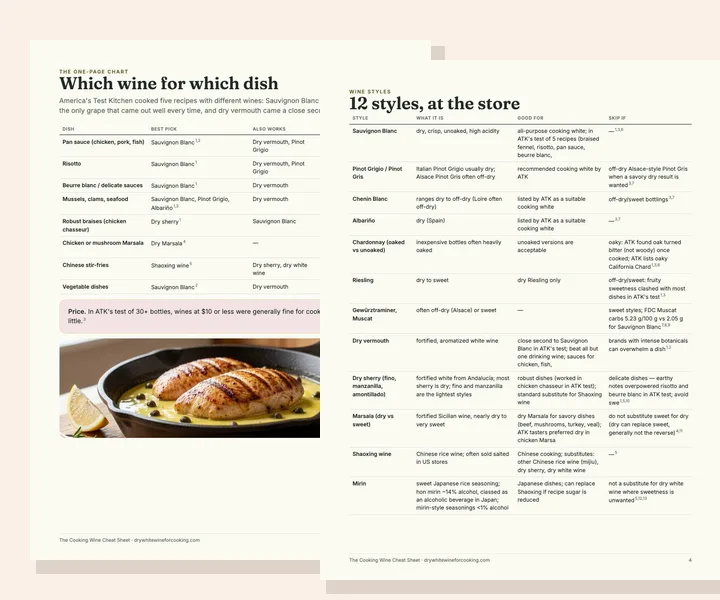
Free printable · 13 pages
Get The Cooking Wine Cheat Sheet
The Cooking Wine Cheat Sheet prints every substitute on one table with amounts for 1/4, 1/2 and 1 cup of wine, plus the dishes each one suits.
- Which wine for which dish, on one page
- 12 wine styles: what to buy, what to skip
- Every substitute with its ratio
- USDA alcohol-left table, storage notes · US Letter and A4
Using dry vermouth instead
When alcohol is acceptable, the simplest swap is dry vermouth. ATK uses it in equal amounts and found it worked in every chicken, fish and vegetable sauce it tried, with results slightly sweeter and more herbal than white wine 3. In a broader test it came second only to Sauvignon Blanc 6.
Two cautions. Brands with intense botanicals can overwhelm a delicate dish, so choose a milder one. And because vermouth is a fortified wine, it is no help to anyone avoiding alcohol. Its big advantage is shelf life: an opened bottle keeps for months in the fridge.
Adjusting the dish after you swap
A substitute changes more than the liquid, so taste and correct before serving.
Watch the salt. Regular white wine has only about 5 mg of sodium per 100 g 7, but many store-bought broths add plenty. Use low-sodium broth where you can and season at the end, not the start.
Add acid late. Lemon juice and vinegar taste brightest when stirred in just before serving, which is also how ATK handles its broth swap 1. Boiled for a long time, they turn dull.
Balance sweetness. Grape and apple juice make a sauce slightly sweet. A few drops of vinegar or a pinch more salt bring it back to savory.
Mind the reduction. Wine is usually reduced before other liquids go in. Broth needs less reducing to taste right, so shorten that step or the sauce may get salty.
The best substitute for white wine in cooking, by dish
| Dish | First choice | Also works |
|---|---|---|
| Pan sauce | Broth + acid added at the end | Dry vermouth 1:1 |
| Risotto | Broth + acid | Dry vermouth 1:1 |
| Chicken or fish | Diluted white wine vinegar | Broth + lemon |
| Soups and stews | Broth, acid stirred in before serving | White grape juice + vinegar |
| Steamed shellfish | Broth + lemon | Dry vermouth |
| Chinese recipes calling for Shaoxing | Dry sherry or another rice wine | Dry white wine |
The Shaoxing row follows The Woks of Life, which lists dry sherry, other Chinese rice wine or dry white wine as stand-ins 8. The dry sherry page covers sherry swaps in more depth, and the risotto page explains how to handle the wine step without wine.
For red wine recipes, see best red wine for cooking.
Substitutes and alcohol
If your reason for swapping is alcohol, check the substitute too. Salted cooking wine is not alcohol-free: USDA data show 3.3 g of alcohol per 100 g 9, along with a lot of salt, so it is not a workaround.
Wine vinegar may carry trace alcohol 2, and hon mirin is about 14% alcohol 10.
Broth, juice, verjus and the water-vinegar-sugar mix are the truly alcohol-free routes. Simply cooking wine longer reduces alcohol but doesn't remove it; our page on whether alcohol cooks off explains the USDA retention figures. For the wider basics of choosing a bottle, see the dry white wine for cooking guide.
Frequently asked questions
Can I use white vinegar instead of white wine?
Use white wine vinegar rather than plain distilled vinegar if you can. Healthline suggests diluting white wine vinegar 1:1 with water, then using it in place of the wine 2. Plain white vinegar is harsher and has no wine flavor; if it's all you have, use much less, mixed into broth, and taste as you go.
What can I substitute for 1 cup of dry white wine?
Use 1 cup of broth with 2 teaspoons of wine vinegar or lemon juice, which doubles ATK's ratio of 1/2 cup broth and 1 teaspoon acid per 1/2 cup wine 1. Another ATK page uses half that acid, so start low and taste. With alcohol on the table, equal parts dry vermouth is the easy answer.
Can you leave white wine out of a recipe?
Often, yes, if the recipe uses only a splash. Replace it with the same amount of broth or water and add a little lemon juice at the end for brightness. Plain water adds only liquid, not flavor 2, so when wine is a main ingredient, as in risotto or a braise, use broth plus acid instead.
What can I use instead of white wine in a cooking dish?
Match the swap to the dish. For pan sauces, soups and risotto, use broth with a little lemon juice or wine vinegar. For chicken and fish, white wine vinegar diluted half and half with water works well 2. For dishes that can take a little sweetness, white grape juice with a splash of vinegar is a good fit.
What is an alternative choice for white wine?
Dry vermouth is the closest alternative with alcohol; America's Test Kitchen rates it a close second to Sauvignon Blanc for cooking 6. Without alcohol, broth plus a little lemon juice or wine vinegar covers most recipes, with the acid stirred in at the end. White grape juice with a splash of vinegar suits dishes that can take a touch of sweetness.
Sources
- Cook's Illustrated / America's Test Kitchen: How to substitute for wine
- Healthline (Brianna Elliott, RD), 2017: 11 non-alcoholic substitutes for wine (cooking)
- America's Test Kitchen / Cook's Country: Substituting vermouth for white wine in cooking
- RecipeTips: Verjus (glossary)
- America's Test Kitchen: Cooking with wine (how-to 5706)
- America's Test Kitchen / Cook's Illustrated: What's the best white wine for cooking?
- USDA FoodData Central (SR Legacy), 2019: Alcoholic beverage, wine, table, white (FDC ID 174837, NDB 14106)
- The Woks of Life: Substitutions for Shaoxing wine
- USDA FoodData Central (SR Legacy), 2019: Alcoholic beverage, wine, cooking (FDC ID 169070, NDB 43154)
- Kikkoman Corporation: Glossary — Seasonings: Mirin