Cooking with wine
Chardonnay for Cooking: When to Use It and When to Skip It
By the editorial team · Updated 2026-11-25 · Every number linked to its source
Quick answer. Chardonnay for cooking works only if the bottle is unoaked. America's Test Kitchen found that oak turned bitter, not woody, once the wine was cooked down 1, and many inexpensive Chardonnays are heavily oaked. If you can't tell, use Sauvignon Blanc or dry vermouth instead.
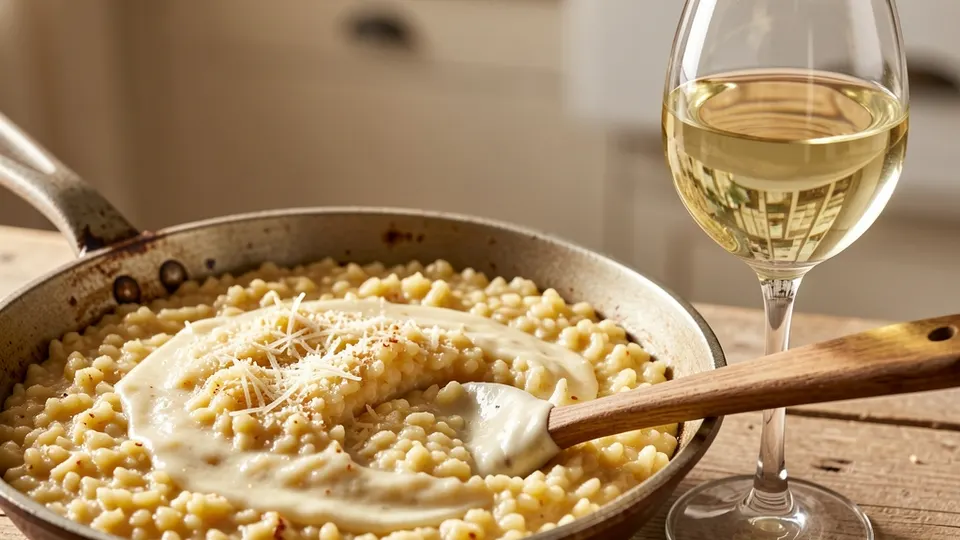
Chardonnay for cooking is a fair question, because it is one of the most familiar whites on American shelves and often the bottle already open. The honest answer is that it depends on one thing: oak. Unoaked Chardonnay is a perfectly good cooking wine. Oaked Chardonnay, the buttery, toasty style that is common at lower prices, is one of the few wines that reliably gets worse in the pan. This page explains why, how to spot the difference on the shelf, where Chardonnay can still earn its place, and what to reach for when it can't.
Oaked vs unoaked Chardonnay for cooking
Chardonnay is a fairly neutral grape. Much of what people recognize as "Chardonnay flavor," the vanilla, toast and butter, comes from winemaking, especially aging in oak barrels or with oak added in other forms.
That oak is the problem. In America's Test Kitchen (ATK) tests, oaked Chardonnay turned bitter rather than woody once it was reduced 1. ATK also names oaky California Chardonnay among the wines that added flavors tasters disliked in cooked dishes 2.
Unoaked Chardonnay doesn't carry that baggage. Made in stainless steel or neutral containers, it tastes clean, with moderate acidity and fruit, and ATK treats unoaked versions as acceptable for cooking 1.
Why oak turns bitter in the pan
Cooking a wine is mostly a process of concentration. As it simmers, water and alcohol evaporate, and what's left gets stronger. Flavors that are balanced in a glass by fruit and chill become exaggerated when the liquid is reduced and served hot.
Oak-derived flavors don't survive that well. What reads as a gentle toastiness in a cold glass comes across as harsh and bitter in a reduced sauce. ATK's tasters noticed exactly that shift 1. The effect is strongest in dishes where the wine reduces hard and has little to hide behind, such as pan sauces, and weaker in a long braise with plenty of other ingredients.
Price doesn't protect you. Because inexpensive Chardonnay is often heavily oaked 1, the cheap bottle you might grab for cooking is more likely to be the problem style, not less.
Reading the label
You usually can't taste before you buy, so read what the bottle tells you.
- Look for "unoaked" or "unwooded." These are the clearest signals.
- Watch the tasting notes. Words like vanilla, toast, butter, cream, caramel or "barrel" on the back label point to oak.
- Read the style words. "Crisp," "steel" or "fresh" suggest little or no oak; "rich" and "buttery" suggest the opposite.
- When in doubt, taste. If an open bottle tastes noticeably toasty or creamy, save it for drinking and cook with something else.
None of this requires a particular brand or a high price; an unoaked bottle at an everyday price is all a sauce needs 3.
Free printable · 13 pages
Get The Cooking Wine Cheat Sheet
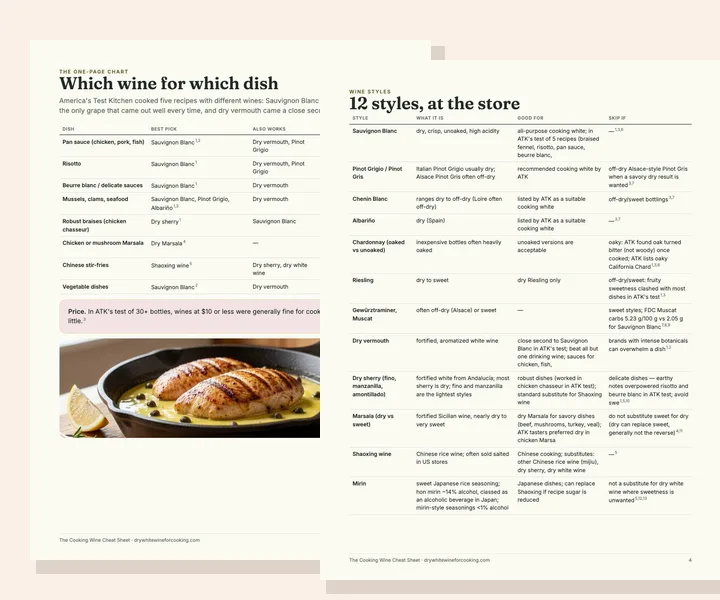
The Cooking Wine Cheat Sheet has a one-line label check for oak and a list of swaps for every recipe that names Chardonnay, so an oaky bottle never ends up in your sauce.
- Which wine for which dish, on one page
- 12 wine styles: what to buy, what to skip
- Every substitute with its ratio
- USDA alcohol-left table, storage notes · US Letter and A4
A quick stovetop test for an unknown bottle
If a label gives you nothing to go on, let the stove decide. Pour a few tablespoons of the wine into a small skillet and simmer it until it has reduced by about half. Let it cool for a moment, then taste.
A good cooking Chardonnay will taste concentrated but still fresh, a little tart, maybe fruity. An oak-heavy bottle will taste noticeably bitter or harsh at the back of the tongue. That bitterness is what would end up in your sauce, only more of it, since a real recipe reduces a larger amount for longer.
The test costs a splash of wine and saves a pan of sauce. It also works for any unfamiliar white, not only Chardonnay: a wine that tastes sweet or flat after reducing is telling you the same thing.
Where unoaked Chardonnay works
Richer chicken and pork dishes. An unoaked Chardonnay's fuller body suits dishes with cream, mushrooms or mustard, where a very sharp wine might feel thin.
Recipes that name it. If a recipe specifically asks for Chardonnay, an unoaked bottle keeps the intent of the dish without the risk of bitterness.
Cream sauces, with care. Cream softens acidity and bitterness alike, so a cream-finished sauce is more forgiving than a butter-only one. Even so, reduce the wine before the cream goes in, and taste. If you notice bitterness after reducing, more cooking won't fix it.
For delicate dishes like risotto and beurre blanc, where differences between wines show most 1, a crisper wine is the safer pick. Our white wine for risotto page explains the options.
When to skip Chardonnay
Skip it when the bottle is oaked or you can't tell, when the sauce is mostly butter and wine, and when the wine will reduce hard. In those cases a high-acid, unoaked white does the job better.
Sauvignon Blanc is the default replacement, since it was the most consistent performer in ATK's cooking trial 1. For a gentler result, use a dry Italian-style Pinot Grigio. Dry vermouth swaps in equal amounts and keeps for months once opened 4. See the Sauvignon Blanc guide, the Pinot Grigio guide or the full ranking of the best white wine for cooking.
If you've already opened an oaky bottle
You don't have to pour it out. Use it where its flavor has company: a long chicken braise with tomatoes and herbs, a hearty bean stew, or a soup with plenty of aromatics. Add it early so it has time to blend in, and taste the dish before serving.
Full-bodied whites like Chardonnay don't keep as long as light ones once opened. For fuller whites like this, Wine Folly's window is 3 to 5 chilled days 5; ATK is stricter about leftover wine in general 6. Our opened wine guide explains the difference and how freezing can help.
New to cooking with wine? The dry white wine for cooking guide is the place to start.
Frequently asked questions
Can you cook with Chardonnay?
Yes, if it is unoaked. Unoaked Chardonnay is clean and moderately acidic and works in richer chicken, pork and cream dishes. Oaked Chardonnay is the risk: America's Test Kitchen found that oak turned bitter, not woody, once the wine was cooked down 1. If you can't tell which kind you have, use Sauvignon Blanc instead.
Is oaked Chardonnay good for cooking?
Generally not. America's Test Kitchen lists oaky California Chardonnay among wines that added flavors tasters disliked in cooked dishes 2. Reduction concentrates oak flavor into bitterness, especially in pan and butter sauces. If you already have an open bottle, use it in a long braise or soup with plenty of other ingredients, where it is less exposed.
What are the main differences between Chardonnay and Sauvignon Blanc?
The big gap is oak. Sauvignon Blanc rarely sees any, and its sharp acidity survives reduction, which helped it win America's Test Kitchen's cooking trial 1. Chardonnay is rounder and softer and frequently oak-aged, and that oak can turn bitter in a reduced sauce. For most recipes, Sauvignon Blanc is the safer choice; unoaked Chardonnay suits richer, creamier dishes.
Should I use Chardonnay or Pinot Grigio for cooking?
If the Chardonnay is oaked, choose Pinot Grigio. Pinot Grigio in the dry Italian style is light, neutral and on America's Test Kitchen's list of good cooking whites 2. An unoaked Chardonnay is a fair alternative for richer, creamier dishes. For sharp butter sauces, Sauvignon Blanc beats both, and dry vermouth is a handy backup that keeps for months.
Sources
- America's Test Kitchen / Cook's Illustrated: What's the best white wine for cooking?
- America's Test Kitchen / Cook's Illustrated: The best wine for cooking is not what you think
- America's Test Kitchen / Cook's Country: Cooking with wine (how-to 5887)
- America's Test Kitchen / Cook's Country: Substituting vermouth for white wine in cooking
- Wine Folly: How long does an open bottle of wine last?
- America's Test Kitchen: The best way to save leftover wine