Cooking with wine
Sauvignon Blanc for Cooking: The Test Kitchen Favorite
By the editorial team · Updated 2026-11-25 · Every number linked to its source
Quick answer. Sauvignon Blanc for cooking is the safest all-purpose white. Its high acidity and lack of oak let it reduce cleanly, and it was the most consistent wine in America's Test Kitchen's 5-dish trial 1. Buy a dry, unoaked bottle; it does not need to be expensive.
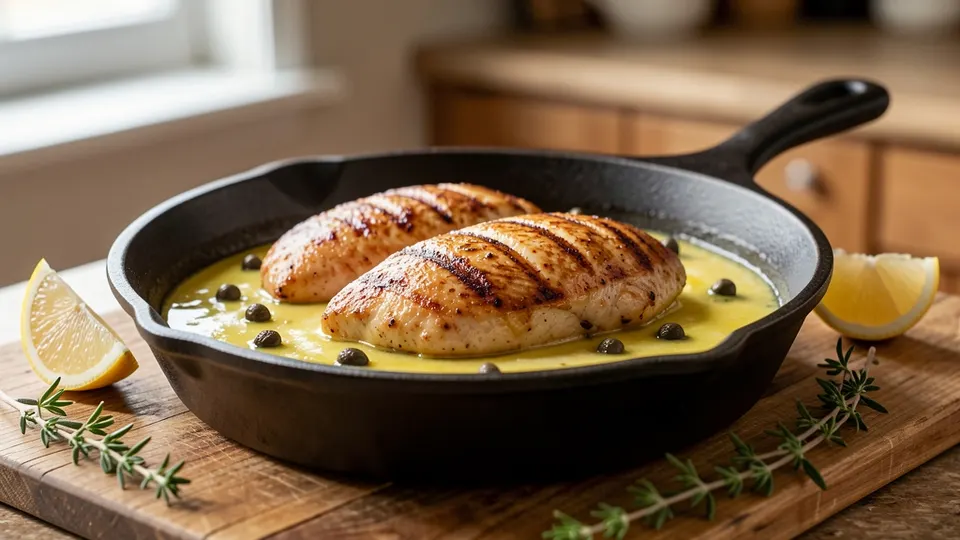
If you only keep one white wine in the kitchen, Sauvignon Blanc for cooking is the strongest candidate. It is almost always dry, rarely aged in oak, and high in the kind of acidity that makes sauces taste finished rather than flat. That combination is why it came out on top in side-by-side kitchen testing. This page explains what made it win, what its acidity actually does in a pan, which dishes it suits, how it compares with Pinot Grigio and Chardonnay, and how to pick a bottle without paying for things a sauce can't use.
Why Sauvignon Blanc for cooking came out on top
America's Test Kitchen (ATK) put a lineup of whites through five dishes, from delicate risotto and beurre blanc to a hearty chicken braise; our ranking page lists them all. Sauvignon Blanc was the one varietal that worked across every dish, keeping enough acidity after reduction to make each one taste lively 1.
The reasons are in the style. Sauvignon Blanc is usually fermented and aged without oak, so there is no wood flavor to turn bitter as the wine reduces. It is dry, so there is little sugar to concentrate into unwanted sweetness. And its acidity is high, which matters more than any aroma once the wine has simmered. ATK's general rule, that a cooking wine should be bright, balanced and free of tannin, sweetness and oak, describes most Sauvignon Blanc almost exactly 2.
What acidity does in the pan
When wine simmers, water and alcohol evaporate while acids and flavor compounds stay behind. A wine with little acid reduces to something heavy or bland. A high-acid wine like Sauvignon Blanc reduces to a sharp, bright base that cuts through butter, cream and browned meat juices.
That is why it shines in emulsified butter sauces. A beurre blanc or a classic pan sauce is mostly fat, and the acid is what keeps it from tasting greasy. ATK's white wine pan sauce, for example, balances 1/2 cup of dry white wine and 3/4 cup of chicken broth against 3 tablespoons of chilled butter 3.
Acidity also helps flavors read clearly in delicate dishes. Differences between wines were most noticeable in gently flavored dishes like risotto and beurre blanc 1, which is exactly where Sauvignon Blanc's clean profile pays off.
Dishes that suit it
Butter and pan sauces. Deglaze the pan after searing chicken, pork or fish, reduce, and whisk in butter off the heat.
Risotto. A clean, acidic wine balances the richness of the rice and cheese; our risotto page covers how much to add and when.
Shellfish. Steamed mussels and clams, and garlicky shrimp dishes such as scampi, work on the same principle as a pan sauce: a crisp wine reduced with garlic and butter.
Braised vegetables. Fennel, leeks and artichokes braised in wine take on its brightness without sweetness.
Chicken braises. Sauvignon Blanc worked in ATK's chicken chasseur, though in robust dishes like that, a dry sherry also performed well 1.
The full chart that matches each common dish with a first and second choice is part of the cheat sheet.
A basic method for a Sauvignon Blanc pan sauce
This is the pattern most wine pan sauces follow, and it shows off what Sauvignon Blanc does well.
- Brown chicken, pork chops or fish, set them aside, and leave the fat in the pan.
- Soften a little minced shallot or garlic over medium heat.
- Pour in the wine and scrape up every browned bit from the bottom of the pan.
- Simmer until the wine has reduced and no longer smells sharp, then add broth and reduce again until slightly syrupy.
- Take the pan off the heat and swirl in cold butter a piece at a time, then season and add herbs.
Taste before adding salt. The browned bits and the broth already bring some, and the wine's acidity makes a sauce taste more seasoned than it is.
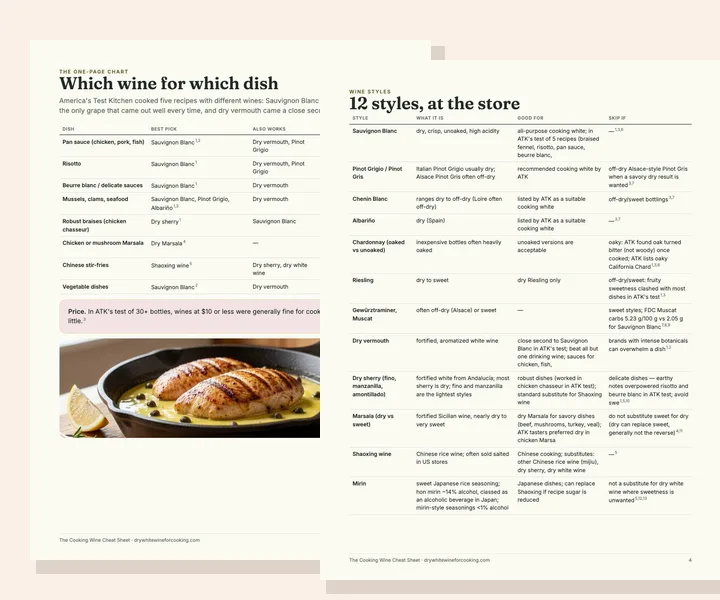
Free printable · 13 pages
Get The Cooking Wine Cheat Sheet
The Cooking Wine Cheat Sheet has a how-much-wine guide that scales a Sauvignon Blanc pan sauce, wine, broth and butter, to the size of your batch.
- Which wine for which dish, on one page
- 12 wine styles: what to buy, what to skip
- Every substitute with its ratio
- USDA alcohol-left table, storage notes · US Letter and A4
If there's no Sauvignon Blanc in the house
Dry vermouth is the closest swap and can be used in equal amounts, though sauces come out slightly sweeter and more herbal 4. For an alcohol-free version, ATK replaces each 1/2 cup of wine with 1/2 cup of broth plus 1 teaspoon of wine vinegar or lemon juice 5. Our substitutes guide compares the other options.
Sauvignon Blanc vs Pinot Grigio and Chardonnay
| Sauvignon Blanc | Pinot Grigio | Chardonnay | |
|---|---|---|---|
| Typical style | Dry, crisp, unoaked | Light, neutral (Italian style) | Often oaked, sometimes unoaked |
| Acidity | High | Moderate | Moderate to low |
| Cooking risk | Low | Off-dry Pinot Gris versions | Oak turns bitter when reduced |
| Best use | All-purpose, butter sauces | Light seafood, gentle sauces | Unoaked only, richer dishes |
The table reflects ATK's results and Wine Folly's style notes 16. In short, Pinot Grigio is a milder, softer cousin, and Chardonnay is a gamble unless the label says unoaked. Details for both are on the Pinot Grigio for cooking and Chardonnay for cooking pages.
Not to be confused with
Chenin Blanc. A different grape, not another name for Sauvignon Blanc. It ranges from dry to off-dry, with Loire bottlings often on the sweeter side 6. A dry Chenin Blanc is a good cooking wine in its own right and ATK lists it as a suitable choice 2.
Cabernet Sauvignon. A red grape that only shares part of the name, so it can't stand in for a white; our red wine guide covers where it fits.
Choosing a bottle
Price is not the deciding factor, and an inexpensive bottle is the norm for cooking (the main guide has the test results on price). Almost any dry Sauvignon Blanc will do. A few things to check:
- Late-harvest and dessert bottlings are sweet; leave them for the cheese course.
- If the back label mentions oak, toast or vanilla, pick another bottle; most Sauvignon Blanc is unoaked, but not all.
- Skip salted cooking wine entirely; our cooking wine vs regular wine page explains why.
For reference, USDA data list Sauvignon Blanc at 2.05 g of carbohydrate and 10.5 g of alcohol per 100 g 7, a typical profile for a dry white. How it stacks up against vermouth, sherry and the rest is on the best white wine for cooking page.
Frequently asked questions
What kind of white wine is best for cooking sauces?
A dry, crisp, unoaked white, and Sauvignon Blanc first of all. In America's Test Kitchen's trial, it was the only varietal that consistently reduced to a clean yet acidic flavor in pan sauces, beurre blanc and other dishes 1. Dry vermouth is a close second and works well in chicken, fish and vegetable sauces.
Is chenin blanc the same as Sauvignon Blanc?
No. They are different grapes. Sauvignon Blanc is nearly always dry and crisp, while Chenin Blanc ranges from dry to off-dry, and Loire versions are often slightly sweet 6. A dry Chenin Blanc still makes a good cooking wine, but check the label or taste it before using it in a savory sauce.
What white wine goes well with shrimp scampi?
A crisp, dry white such as Sauvignon Blanc is the natural fit, because scampi is essentially a garlic and butter pan sauce that needs acidity to balance the fat. If you prefer a softer sauce, a dry Italian-style Pinot Grigio works too. Avoid oaky or sweet wines. ATK's pan sauce ratio, 1/2 cup wine to 3/4 cup broth for four servings, is a useful guide 3.
Is Sauvignon Blanc good for cooking?
Yes, it is the most reliable white for cooking. It is typically dry, unoaked and high in acid, so it reduces cleanly without turning sweet or bitter, and it beat the other grapes in America's Test Kitchen's multi-dish trial 1. Use it for pan sauces, risotto, shellfish and braised vegetables, and skip late-harvest bottles.
Which Sauvignon Blanc is best for cooking?
Any dry, unoaked Sauvignon Blanc you would not mind drinking. A premium bottle adds little once the wine is reduced; America's Test Kitchen saw only minimal benefit from far pricier wines 8. Avoid late-harvest or dessert styles and anything labeled cooking wine. We don't recommend brands; the style is what matters.
Sources
- America's Test Kitchen / Cook's Illustrated: What's the best white wine for cooking?
- America's Test Kitchen / Cook's Illustrated: The best wine for cooking is not what you think
- America's Test Kitchen / Cook's Illustrated: White Wine Pan Sauce (recipe 7794)
- America's Test Kitchen / Cook's Country: Substituting vermouth for white wine in cooking
- Cook's Illustrated / America's Test Kitchen: How to substitute for wine
- Wine Folly: Wines from dry to sweet (chart)
- USDA FoodData Central (SR Legacy), 2019: Alcoholic beverage, wine, table, white, Sauvignon Blanc (FDC ID 173201)
- America's Test Kitchen / Cook's Country: Cooking with wine (how-to 5887)