Cooking with wine
The Best Red Wine for Cooking: A Short, Practical Guide
By the editorial team · Updated 2026-11-25 · Every number linked to its source
Quick answer. Pick a dry, balanced red without heavy tannin, sweetness or oak. America's Test Kitchen found a $4 Cabernet worked well in stews and sauces 2, and in a wider ATK tasting, bottles of about $10 or less held their own in cooked dishes 5.
Which wine for this dish?
Tell the wine-by-dish picker what you're making and it suggests a red or white style, plus a substitute if you'd rather skip wine.
Based on America's Test Kitchen tests and Woks of Life. 1234
Want it on paper? The Cooking Wine Cheat Sheet has every dish, wine style and substitute on printable pages.
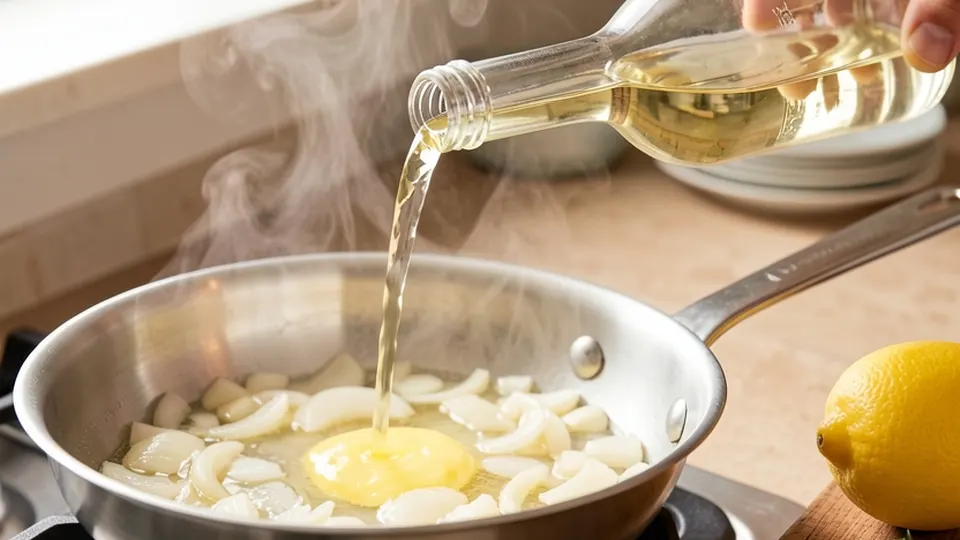
This site is mostly about dry white wine, but plenty of recipes ask for red: beef stew, short ribs, ragù, a red wine pan sauce for steak. The best red wine for cooking follows the same logic as the best white. You want something dry and balanced that tastes of wine once it has reduced, not of oak, sugar or harsh tannin.
Below is a short guide to the styles that work, the ones to skip, how much you need to spend, and what to do with the rest of the bottle. Where our sources go quiet on red specifically, we say so and point you to the closest tested advice.
What makes the best red wine for cooking
ATK's advice for any cooking wine is to choose something plain rather than showy: lively, even-keeled, and free of obvious tannin, sugar or oak 2. That applies to reds just as much as whites.
The reason is reduction. As wine simmers, water and alcohol leave and everything else concentrates. A touch of oak or tannin that seems pleasant in a glass can turn bitter or astringent in a reduced sauce. Sweetness concentrates too, which pulls a savory braise off course.
So the target is a dry, medium-bodied red you'd describe as easygoing rather than bold. If the back label talks about big tannins, long oak aging or jammy sweetness, it's a weaker choice for the pot.
Red wine styles that work
In ATK's tests, a $4 Cabernet worked well in stews and sauces 2. That's a useful signal: an inexpensive, straightforward bottle of a common red grape is usually enough.
Beyond that, our sources didn't run a varietal-by-varietal test for red the way ATK did for white, so we won't rank grapes. Practical guidance that follows from the tested principle:
- For long braises (beef stew, short ribs, coq au vin), a dry, medium-bodied red holds up and reduces into a rounded sauce.
- For quick pan sauces, a lighter, fruit-forward dry red keeps the sauce bright.
- For tomato sauces and ragù, a dry, unoaked red adds depth without fighting the tomatoes' acidity.
If a recipe names a specific wine, follow it. If it just says "dry red", use what fits the rules above.
What to avoid
Heavily oaked or very tannic reds. ATK lists distinctly tannic and oaky wines among those that add disliked flavors in cooking 2. Its white wine testing found oak turned bitter once cooked 1, and the same reduction applies to red.
Sweet reds. Sweetness concentrates as the sauce reduces. ATK found sweet wines added flavors tasters disliked 2.
Salted "red cooking wine". It carries a lot of salt by design; see can you drink cooking wine for the sodium numbers.
Expensive bottles. Not harmful, just unnecessary, as the next section shows.
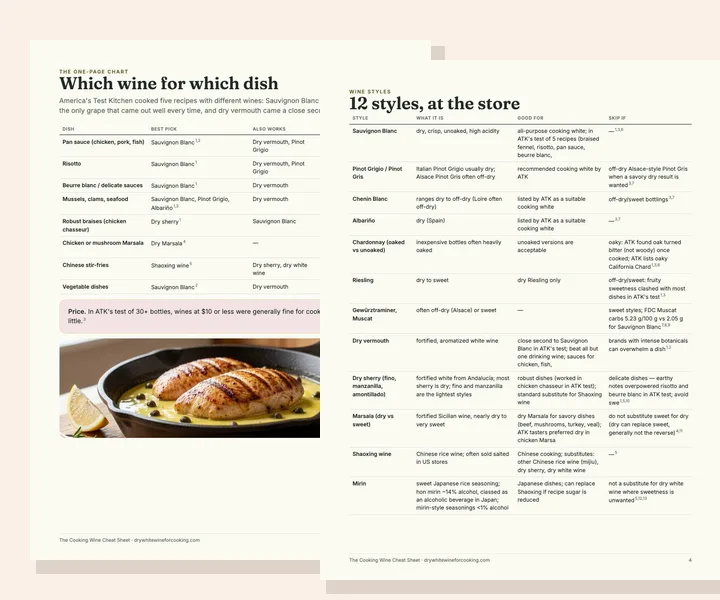
Free printable · 13 pages
Get The Cooking Wine Cheat Sheet
Get the Cooking Wine Cheat Sheet: its wine-by-dish chart shows red or white for common recipes, with an alcohol-free swap in every row.
- Which wine for which dish, on one page
- 12 wine styles: what to buy, what to skip
- Every substitute with its ratio
- USDA alcohol-left table, storage notes · US Letter and A4
How much to spend
Less than you might think. ATK tested more than 30 bottles, from $5 jug wine to $30 Bordeaux, and concluded that a bottle around $10 or under is enough for the pot; the $30 wines added little, though some tasters noticed more complexity in pan sauces 5.
In a separate test, two $4 bottles, one Sauvignon Blanc and one Cabernet, worked well in stews and sauces, while pricier sweet or oaky wines added flavors tasters disliked 2. Style matters far more than price.
Boxed wine is worth considering if you cook with red often. ATK recommends boxed wine for cooking because the bag collapses as you pour, so the wine keeps longer 6.
Leftover red wine for cooking
ATK recommends storing leftover wine in the fridge in an airtight container with as little air space as possible, for no more than 2 to 3 days if you plan to drink it 7. For cooking, freezing is the better bet.
ATK froze Pinot Noir and Cabernet for a week. Thawed, the reds lost some liveliness and threw sediment, yet once simmered in a sauce they behaved like fresh wine 7. Freeze 1 Tbsp per ice-cube well and drop cubes straight into a sauce 6. Details in how long opened wine lasts for cooking.
Red or white? A quick rule
Many recipes give you a choice, and some home cooks only keep one kind open. As a loose rule, red suits beef, lamb, tomato sauces and long, dark braises, while dry white suits chicken, fish, shellfish, cream sauces and risotto.
The overlap is bigger than people expect. A dry white can work in a chicken braise or a light tomato sauce, and dry vermouth, which keeps for months once opened, covers many of the white-wine jobs 3. Swapping red into a delicate white-wine dish is riskier, because its color and tannin change the result more.
If you're choosing a white, start with Sauvignon Blanc for cooking or the overview on the best white wine for cooking.
Red wine substitutes
Our sources give tested ratios for replacing white wine, not red, so treat these as starting points. ATK suggests 1/2 cup broth plus 1/2 tsp red or white wine vinegar or lemon juice in place of 1/2 cup wine for soups and stews, stirred in just before serving 6. For red-wine dishes, beef broth with red wine vinegar is the natural fit.
For beef and mushroom dishes, dry Marsala is another option; Wine Folly lists it for savory dishes such as beef, mushrooms and veal 8. More ideas on the white wine substitutes page, and for whites see the best white wine for cooking.
Frequently asked questions
Which red wine is best for cooking?
A dry, balanced red without heavy tannin, oak or sweetness. America's Test Kitchen found that a $4 Cabernet worked well in stews and sauces, while pricier sweet or oaky wines added flavors tasters disliked 2. Our sources didn't rank red grapes, so choose a straightforward, medium-bodied bottle you'd call easygoing rather than bold.
What wine for bolognese?
Our sources didn't test wines in bolognese specifically. Following America's Test Kitchen's general rule, use a dry, balanced wine without heavy oak, tannin or sweetness 2. Many bolognese recipes call for red, some for white; either works if it's dry. Add it early and let it reduce before the tomatoes and milk go in.
What is the difference between red and white wine?
For cooking, red brings deeper color and more tannin, which suits beef, lamb and tomato dishes, while white is lighter and more acidic, which suits chicken, fish, risotto and cream sauces. The same rule applies to both, per America's Test Kitchen: choose a bright, balanced wine without strong tannin, sweetness or oak 2.
What are the most popular wines for cooking?
For reds, everyday dry styles such as an inexpensive Cabernet; ATK found a $4 bottle did well in stews and sauces 2. For whites, Sauvignon Blanc led ATK's cooking test, with dry vermouth close behind 1. Popular doesn't have to mean pricey: plain, dry and balanced is what matters once the wine reduces.
Sources
- America's Test Kitchen / Cook's Illustrated: What's the best white wine for cooking?
- America's Test Kitchen / Cook's Illustrated: The best wine for cooking is not what you think
- America's Test Kitchen / Cook's Country: Substituting vermouth for white wine in cooking
- The Woks of Life: Substitutions for Shaoxing wine
- America's Test Kitchen / Cook's Country: Cooking with wine (how-to 5887)
- America's Test Kitchen: Cooking with wine (how-to 5706)
- America's Test Kitchen: The best way to save leftover wine
- Wine Folly: What is Marsala wine