Cooking with wine
Cooking Wine vs Regular Wine: What's Actually Different
By the editorial team · Updated 2026-11-25 · Every number linked to its source
Quick answer. The main difference in cooking wine vs regular wine is added salt. USDA data show about 626 mg of sodium per 100 g in cooking wine 3, against 5 mg in regular white table wine 4. For flavor and control over seasoning, an inexpensive dry regular wine is the better buy.
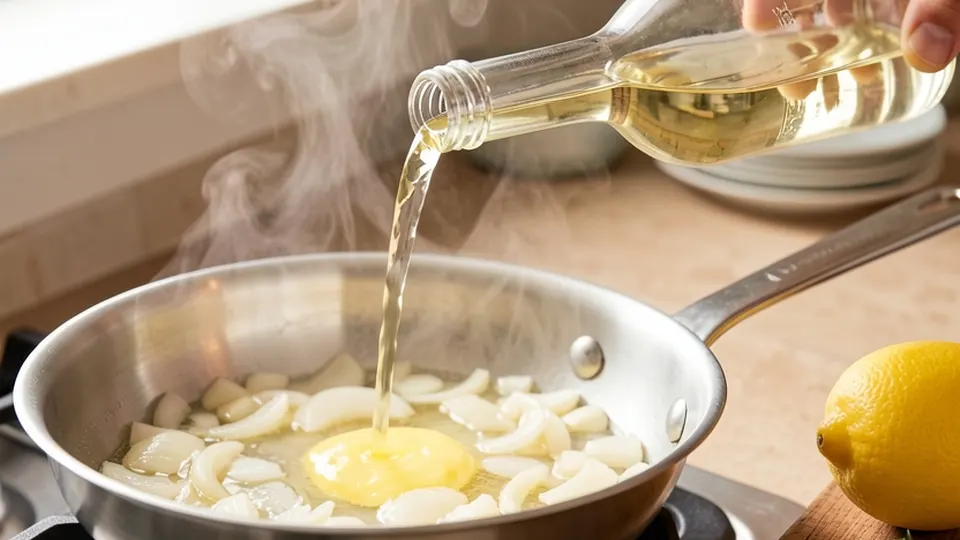
The cooking wine vs regular wine question usually comes up in the grocery store, where bottles labeled "cooking wine" sit next to the vinegar while regular wine is in a separate aisle or a different store altogether. They look similar, and both start as wine. But cooking wine is deliberately changed so that it isn't treated as a drink, and that change affects your food. This page explains what US rules require, how much sodium those bottles add, what else is in them, why they are sold where they are, and why most cooks are better off with a cheap bottle of the real thing.
What cooking wine is under US rules
Supermarket cooking wine is what federal regulations call nonbeverage wine: wine treated, typically with salt, so that it is unfit to drink as a beverage. Its containers must be marked as not for sale or consumption as beverage wine 1.
The salt level is set by law. Salted wine must contain at least 1.5 g of salt per 100 ml, which the regulator expresses as 12.5 pounds of salt per 100 gallons 2. That is a minimum, so actual bottles can contain more.
Regular wine has no such requirement. It is sold as an alcoholic beverage, under the label and tax rules that apply to drinks, and contains essentially no added salt.
Sodium: cooking wine vs regular wine in numbers
| Per 100 g | Cooking wine (USDA generic) | White table wine (USDA) |
|---|---|---|
| Sodium | 626 mg | 5 mg |
| Calories | 50 kcal | 82 kcal |
| Carbohydrate | 6.3 g | 2.6 g |
| Alcohol | 3.3 g | 10.3 g |
The figures come from USDA FoodData Central 34. The sodium row is the one that matters: over a hundredfold gap. The lower alcohol and higher carbohydrate reflect the generic entry, not every bottle.
Scaled down to a single teaspoon, the generic entry still delivers about 31 mg of sodium 3. A store-brand sherry cooking wine listed in the same database shows 633 mg per 100 ml, or about 190 mg in a 2-tablespoon serving 5.
Brands vary, but all sit in the same range, which is what the legal salt minimum predicts 1.
To see what that means in a real recipe, take a pan sauce that uses 1/2 cup of wine, the amount in ATK's white wine pan sauce for four 6. Made with salted cooking wine, that half cup brings roughly 730 mg of sodium before you add any salt yourself, by our arithmetic from USDA's figures 3. Made with regular white wine, it brings next to none, and you decide how much salt the dish gets.
Preservatives and shelf life
Salt is not the only addition. The store-brand sherry cooking wine in USDA's database lists wine, salt, potassium sorbate and potassium metabisulfite, the last two as preservatives 5. Together with the salt, they help an opened bottle sit in the pantry far longer than regular wine would, which is part of the appeal for cooks who use wine rarely.
Regular wine has no added salt, and an opened bottle needs the fridge and should be used within days. If that is the reason you reach for cooking wine, there are better fixes: freeze leftover wine in an ice cube tray, 1 tablespoon per cube 7, or keep dry vermouth, which lasts months in the fridge. Our opened wine guide covers storage times in detail.
Free printable · 13 pages
Get The Cooking Wine Cheat Sheet
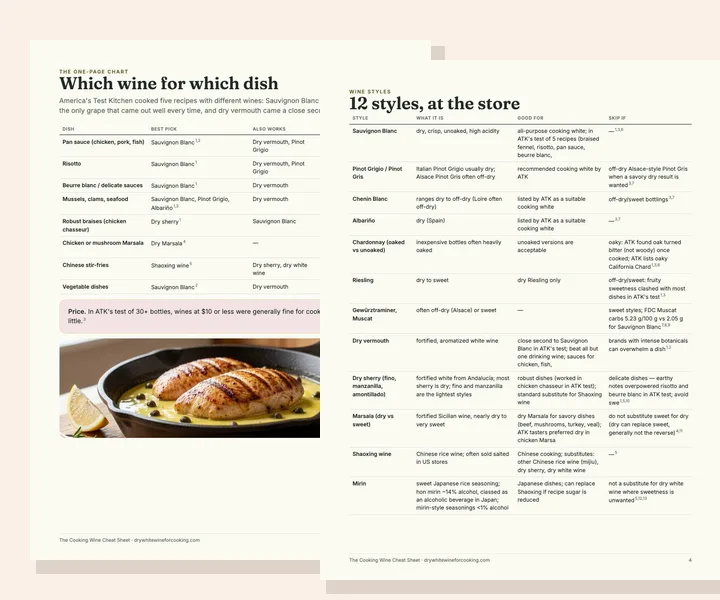
The Cooking Wine Cheat Sheet includes a shopping list that tells you exactly what to buy instead of salted cooking wine, plus a sodium note for recipes that already use it.
- Which wine for which dish, on one page
- 12 wine styles: what to buy, what to skip
- Every substitute with its ratio
- USDA alcohol-left table, storage notes · US Letter and A4
Why it's sold in the grocery aisle
The answer is paperwork. The federal Alcohol and Tobacco Tax and Trade Bureau approves the recipe, or formula, of a domestic salted cooking wine, but the bottle's label is handled like any food label under FDA rules rather than going through beverage label approval 2. That is why it can sit on ordinary grocery shelves, usually near vinegars and condiments, even in stores that don't sell wine.
A California tax ruling from 1968 makes the same distinction in tax terms, describing salted wine sold for cooking as "rendered unfit for beverage use" 8.
Does cooking wine contain alcohol?
Yes. Adding salt makes wine unpleasant to drink but leaves the alcohol in place, so a salted bottle is no shortcut for anyone avoiding alcohol 3. In the pot it behaves like any wine: some alcohol cooks off and some stays, as the USDA figures on does alcohol cook off show.
How much alcohol bottles carry, who may buy them and whether drinking one is a good idea are separate questions, answered on can you drink cooking wine.
How they compare in the pot
America's Test Kitchen (ATK) is blunt about flavor: in its view, the supermarket bottles bring mostly salt and sharpness and very little wine character, and it steers cooks away from them 9. ATK also notes that the salt added as a preservative is what makes cooking wine unpotable 10. That same salt makes it hard to cook with: as a sauce reduces, the salt concentrates, and you lose control over seasoning.
Regular dry wine brings acidity and flavor without the salt, and it doesn't need to be expensive: a bottle in the under-$10 range is what ATK's tasting supports for cooking 9. Our best white wine for cooking ranking shows which styles work best.
If you already have a bottle
You can still use it. Treat it as a seasoning as much as a wine: cut back the salt elsewhere in the recipe, add it early, and taste before you season at the end. It works best in small amounts in robust dishes, where its salt and acidity have company, and worst in delicate sauces or risotto.
The same logic applies to red cooking wine: it is salted red wine, not a different product. Red recipes are covered in best red wine for cooking, alcohol-free swaps in the substitutes guide, and label terms like "dry" in our dry white wine for cooking guide.
Frequently asked questions
How does cooking wine differ from regular wine?
The difference is what has been added. Cooking wine carries enough salt to make it unpleasant as a drink, a legal minimum of 1.5 g per 100 ml 1, plus preservatives in many bottles. That is why it is sold as a grocery item, keeps longer once opened, and adds a lot of sodium to food. Regular wine has none of these additions.
Where is cooking wine in the grocery store?
In most stores, salted cooking wine sits in the condiment or vinegar aisle, not with the beverage wines. Because it is classed as a food, domestic salted cooking wine follows FDA food labeling rules rather than needing beverage label approval 2, so it can be sold where regular wine isn't. Check the label for the word "salted."
What is an alternative for cooking wine?
Swap it for a cheap bottle of regular dry wine, which gives you the acidity without the salt; America's Test Kitchen rates Sauvignon Blanc the best white for the job 10. Dry vermouth is handy because it keeps for months. If you'd rather avoid alcohol, our substitutes guide lists broth-based options with exact ratios.
What is cooking wine?
Cooking wine is ordinary wine that has been salted, and often given preservatives, so that it counts as a food product rather than a drink. US rules call it nonbeverage wine and require the container to say it is not for beverage use 1. It keeps well in the pantry but adds a lot of sodium.
Sources
- US eCFR / Cornell LII (TTB regulation), 2025: 27 CFR 24.215 — Production of nonbeverage wine and wine products
- Alcohol and Tobacco Tax and Trade Bureau (TTB), 2025: Do I need a formula? (Wine)
- USDA FoodData Central (SR Legacy), 2019: Alcoholic beverage, wine, cooking (FDC ID 169070, NDB 43154)
- USDA FoodData Central (SR Legacy), 2019: Alcoholic beverage, wine, table, white (FDC ID 174837, NDB 14106)
- USDA FoodData Central (Branded Foods, brand owner Target Stores), 2019: Sherry Cooking Wine (FDC ID 485268)
- America's Test Kitchen / Cook's Illustrated: White Wine Pan Sauce (recipe 7794)
- America's Test Kitchen: Cooking with wine (how-to 5706)
- California Department of Tax and Fee Administration, 1968: Sales and Use Tax Annotation 245.0980 (2/8/68) — Wine, salted
- America's Test Kitchen / Cook's Country: Cooking with wine (how-to 5887)
- America's Test Kitchen / Cook's Illustrated: What's the best white wine for cooking?