Cooking with wine
Can You Drink Cooking Wine? What's Really in the Bottle
By the editorial team · Updated 2026-11-25 · Every number linked to its source
Quick answer. You can swallow it, but it isn't made to be drunk. Federal rules set a salt floor of 1.5 g in every 100 ml of salted cooking wine 1, which makes it harsh and very salty, and it still contains alcohol.
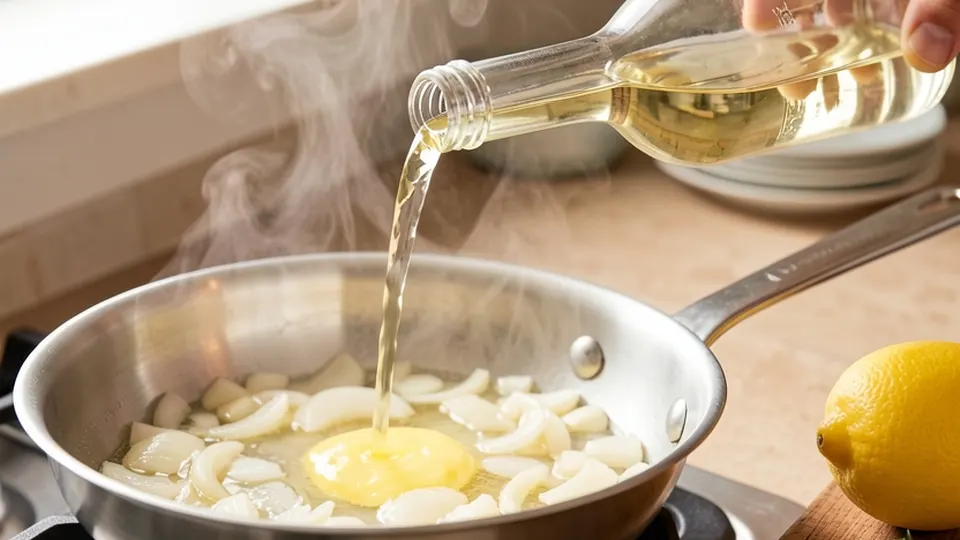
Can you drink cooking wine? It's a fair question when the bottle sits on the grocery shelf next to the vinegar and looks a lot like the wine one aisle over. The short version: the product is deliberately made unpleasant to drink. Federal rules treat salted cooking wine as "nonbeverage" wine, and the bottle has to say it isn't for drinking 1.
This page walks through what's actually in the bottle: how much salt, how much alcohol, who can buy it, and whether it's worth cooking with at all. If you just want something for tonight's pan sauce, a plain dry white wine is usually the better buy.
Can you drink cooking wine? What the label means
Under the federal regulation for nonbeverage wine, salt is added to wine to make it unfit for beverage use, and its label has to warn that it isn't sold for drinking. The rule names salted wine and nonbeverage cooking wine as examples 1.
That legal status is also why you find it next to the oils and vinegars. A US-made salted cooking wine has its recipe approved by the federal TTB, yet skips the label approval that ordinary wine goes through; it follows FDA food labeling instead, so stores sell it as a grocery item 2.
So nothing stops you physically from drinking it, but the product is designed so you won't want to. America's Test Kitchen sums it up plainly: the salt added as a preservative makes cooking wine "unpotable" 3.
How much salt is in cooking wine
The salt floor is set by law. Every 100 ml of salted wine needs a minimum of 1.5 g of salt 1. USDA data for generic cooking wine shows what that looks like on a nutrition panel:
| Per 100 g | Cooking wine | White table wine |
|---|---|---|
| Sodium | 626 mg | 5 mg |
| Calories | 50 kcal | 82 kcal |
| Alcohol | 3.3 g | 10.3 g |
Figures from USDA FoodData Central 4 5.
That is roughly 125 times the sodium of ordinary white wine. A single fluid ounce carries roughly 182 mg of sodium 4. One store-brand sherry cooking wine lists a 2 Tbsp serving with about 190 mg sodium, plus two preservatives, potassium sorbate and potassium metabisulfite 6.
Brands vary a little, but the order of magnitude is the same across the USDA generic, the store brand and the legal minimum.
Does cooking wine have alcohol?
Yes. Salt doesn't remove alcohol, and the bottle still holds alcohol. For the generic product, USDA records 3.3 g in each 100 g 4, and the federal rule allows nonbeverage wine withdrawn tax-free to carry up to 21% alcohol by volume 1.
We could not verify the alcohol percentage printed on individual US cooking wine labels, so check the bottle you have. The practical point stands either way: cooking wine contains alcohol, and some of it stays in food after cooking. Our page on whether alcohol cooks off has the USDA numbers by cooking method.
We don't give advice about drinking it. Treat cooking wine as a salty seasoning, not a beverage.
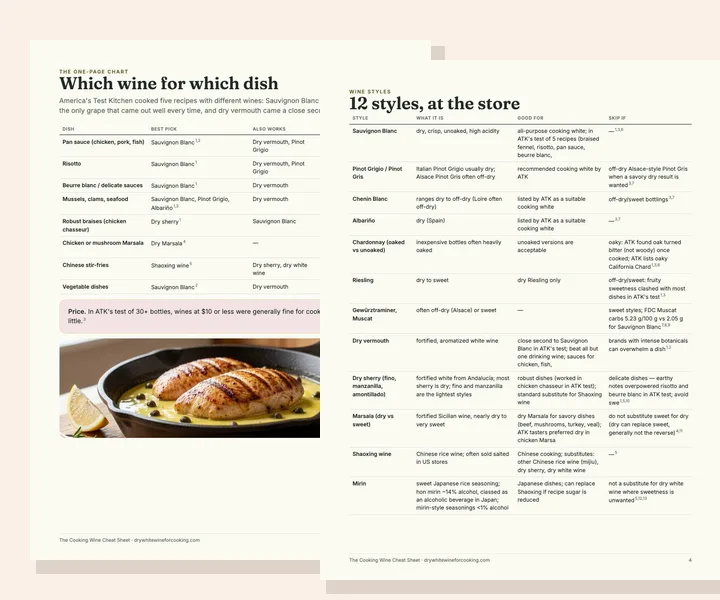
Free printable · 13 pages
Get The Cooking Wine Cheat Sheet
Get the free Cooking Wine Cheat Sheet: a one-page sodium and alcohol comparison of cooking wine vs real wine, plus the swap table for salt-free cooking.
- Which wine for which dish, on one page
- 12 wine styles: what to buy, what to skip
- Every substitute with its ratio
- USDA alcohol-left table, storage notes · US Letter and A4
Who can buy cooking wine: age rules are unclear
There's no single national rule we could find on the minimum age to buy salted cooking wine. Rules are set at the state level, and the wording is often ambiguous.
Maine is a good example. Its statute bars selling food products over 0.5% alcohol by volume to minors, but it exempts flavorings "commonly used for cooking" that are not intended to be consumed as beverages 7. The law doesn't say directly whether salted cooking wine falls under that exemption.
California addressed salted wine back in 1968, but in a tax context: its annotation treats salted cooking wine as made unfit to drink 8. That is a tax ruling, not an age rule.
If you're unsure, ask the store. Many retailers set their own policy at the register.
How to spot cooking wine on the shelf
The two bottles can look alike, so read before you buy. Salted cooking wine usually says "cooking wine" on the front, lists salt in the ingredients and carries a Nutrition Facts panel, because it follows FDA food labeling rather than wine labeling 2. A regular bottle of wine normally has no Nutrition Facts panel at all.
The sodium line is the quickest tell. On a store-brand sherry cooking wine it reads about 190 mg per 2 Tbsp serving 6; plain wine is close to zero. Location helps too: cooking wine is usually shelved with vinegars and oils, while regular wine sits in the wine aisle or a separate store, depending on your state.
Is cooking wine worth cooking with?
Mostly no. America's Test Kitchen tasted supermarket cooking wines and found them flat, sharply acidic and loaded with salt, so it steers cooks away from them 9.
The salt is the real problem in the pan. Wine reduces, salt doesn't, so a sauce made with cooking wine can end up oversalted before you've seasoned it. If you do use it, cut back on the recipe's added salt; each teaspoon of cooking wine brings about 31 mg of sodium 4.
You don't need an expensive bottle instead. After tasting 30+ bottles in cooked dishes, ATK concluded that anything around $10 or under does the job 9. A crisp, unoaked dry white covers most recipes; see the best white wine for cooking and the full comparison of cooking wine vs regular wine.
If you're cooking for someone who avoids alcohol
Because cooking wine contains alcohol, it isn't a workaround for guests who don't drink, for kids, or for anyone avoiding alcohol for health or religious reasons. Idaho State University notes that not all alcohol burns off, and people in recovery or who are pregnant may need to skip alcohol-containing recipes 10.
We don't make medical or religious rulings. What we can do is show what the USDA retention numbers mean and point you to alcohol-free swaps. Broth with a splash of vinegar or lemon juice handles most savory recipes; our white wine substitutes page lists ratios.
Frequently asked questions
Do I have to be 21 to buy cooking wine?
We found no national rule for salted cooking wine. States set their own laws, and they can be unclear. Maine, for example, bans selling foods over 0.5% alcohol to minors but exempts cooking flavorings not meant as beverages, without saying whether cooking wine counts 7. Store policies also vary, so ask at the register if you're unsure.
How alcoholic is cooking wine?
Can you get buzzed from cooking wine?
Cooking wine does contain alcohol, but it's salted on purpose so it's unfit to drink, and the label says it isn't a beverage 1. We don't give advice about drinking it. Use it, if at all, a spoonful at a time as a seasoning, and reduce the recipe's added salt to compensate.
What is the shelf life of cooking wine?
We didn't find a sourced shelf-life figure for salted cooking wine, so go by the date and storage note on your bottle. One store brand lists potassium sorbate and potassium metabisulfite as preservatives alongside salt 6, which is part of why it keeps longer than an open bottle of regular wine. Regular wine has much shorter limits once opened.
Sources
- US eCFR / Cornell LII (TTB regulation), 2025: 27 CFR 24.215 — Production of nonbeverage wine and wine products
- Alcohol and Tobacco Tax and Trade Bureau (TTB), 2025: Do I need a formula? (Wine)
- America's Test Kitchen / Cook's Illustrated: What's the best white wine for cooking?
- USDA FoodData Central (SR Legacy), 2019: Alcoholic beverage, wine, cooking (FDC ID 169070, NDB 43154)
- USDA FoodData Central (SR Legacy), 2019: Alcoholic beverage, wine, table, white (FDC ID 174837, NDB 14106)
- USDA FoodData Central (Branded Foods, brand owner Target Stores), 2019: Sherry Cooking Wine (FDC ID 485268)
- Maine Legislature, 2026: MRS Title 28-A, Chapter 75, §1901 — Restrictions on sale of food containing liquor
- California Department of Tax and Fee Administration, 1968: Sales and Use Tax Annotation 245.0980 (2/8/68) — Wine, salted
- America's Test Kitchen / Cook's Country: Cooking with wine (how-to 5887)
- Idaho State University (Barbara Gordon, RDN), 2019: Alcohol cooks out… or does it?