Cooking with wine
Pinot Grigio for Cooking: A Practical Guide
By the editorial team · Updated 2026-11-25 · Every number linked to its source
Quick answer. Yes, Pinot Grigio for cooking works well, and America's Test Kitchen lists it among its recommended cooking whites 8. Choose a dry Italian-style bottle and avoid off-dry Alsace-style Pinot Gris in savory dishes. When you want the sharpest, cleanest result, Sauvignon Blanc still has the better test record.
Pinot Grigio for cooking is often the bottle already open in the fridge, so it is worth knowing when it does the job and when another wine would do it better. The short version: a dry, light Pinot Grigio is a sensible, neutral cooking white. The catch is that the same grape is sold under two names in two quite different styles, and one of them is noticeably sweeter. This page explains how to tell them apart, which dishes suit the grape, and how it measures up against the other common whites on the shelf.
Pinot Grigio and Pinot Gris: one grape, two styles
Pinot Grigio and Pinot Gris are the same grape. The name on the label usually signals the style. Italian Pinot Grigio is typically dry, light and fairly neutral, while Pinot Gris from Alsace in France is often off-dry, with a rounder, fruitier feel 1.
For most savory recipes, you want the first. An off-dry Pinot Gris can leave a faint sweetness in a pan sauce that you didn't ask for. If a bottle says Pinot Gris and comes from a region known for off-dry wines, either taste it first or save it for drinking.
On paper, a dry Pinot Grigio is very close to Sauvignon Blanc. USDA data list Pinot Grigio at 2.06 g of carbohydrate per 100 g 2, essentially the same as Sauvignon Blanc's 2.05 g 3. The difference between them in the pan is about acidity and aroma, not sugar.
Where Pinot Grigio for cooking fits best
Pinot Grigio's mild, neutral character is an asset in dishes where you want the wine to support rather than lead.
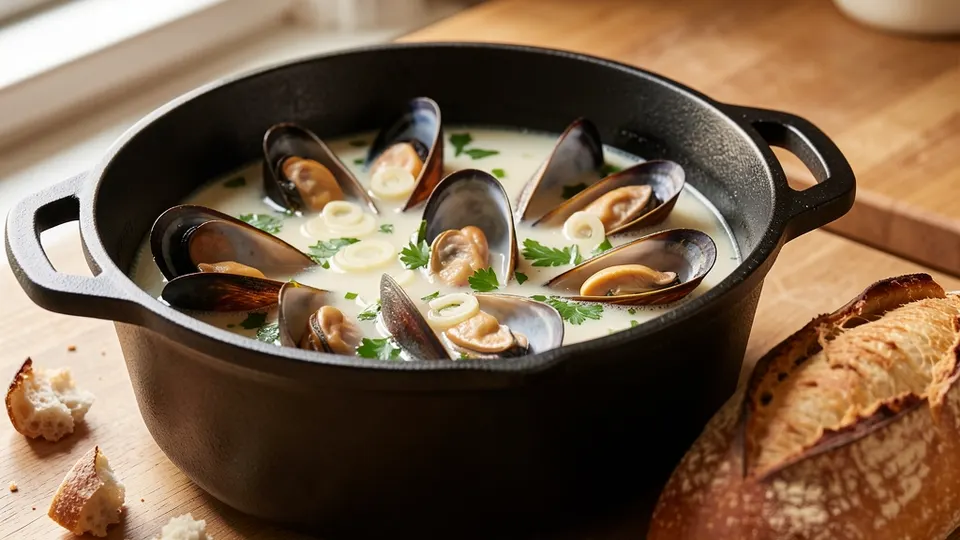
Light seafood. Shrimp, scallops, white fish and steamed shellfish benefit from a gentle wine that adds acidity without a strong aroma of its own.
Quick pan sauces. Pinot Grigio's soft edges suit sauces for chicken cutlets or sole, where a sharper wine could dominate. As a benchmark for the pour, ATK's pan sauce for four people starts with 1/2 cup of dry white 4.
Risotto. Gently flavored dishes are where differences between wines show most 5, so a clean, dry Pinot Grigio is a reasonable choice; our risotto page covers quantities and timing.
Where it falls short is in dishes that need a bright, sharp lift, such as a lemony butter sauce. A higher-acid wine is the better tool there.
Getting the most from a mild wine
Because Pinot Grigio is gentle, technique decides whether you taste it at all.
Add it to a hot pan. Pour the wine in after searing, while the pan is still hot, and scrape up the browned bits. The wine dissolves them and carries their flavor into the sauce.
Let it reduce. Simmer until the raw, sharp smell fades and the liquid looks noticeably less. Reduction concentrates the wine's acidity, which a light wine needs if it is going to register.
Don't add it at the very end. Wine stirred in just before serving tastes raw and keeps most of its alcohol; USDA data show that alcohol stirred into boiling liquid and taken off the heat keeps about 85% 6. Give it time in the pan.
Balance with fat. A few pieces of cold butter or a splash of cream round out a sauce made with a mild wine and make the acidity taste deliberate rather than thin.
Free printable · 13 pages
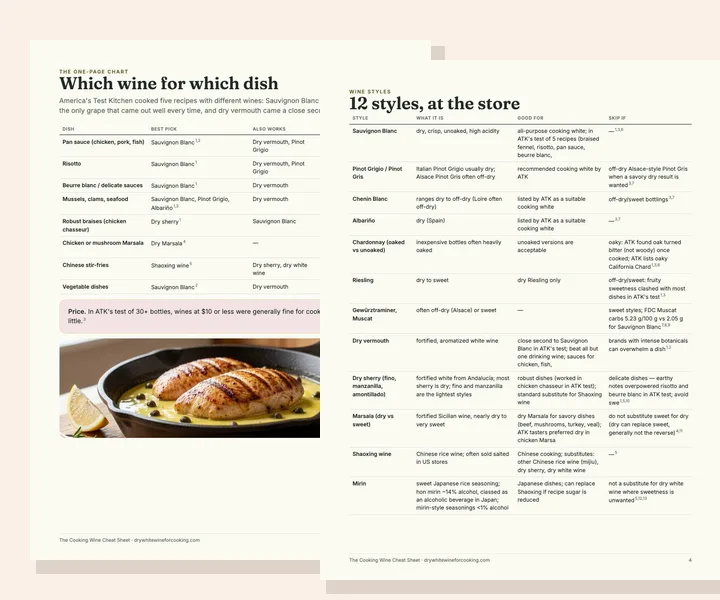
Get The Cooking Wine Cheat Sheet
The Cooking Wine Cheat Sheet marks which dishes suit a light wine like Pinot Grigio and which need a sharper bottle, so you know before you open one.
- Which wine for which dish, on one page
- 12 wine styles: what to buy, what to skip
- Every substitute with its ratio
- USDA alcohol-left table, storage notes · US Letter and A4
Pinot Grigio vs Sauvignon Blanc
These two are the most common dry whites in US stores, and either will work in most recipes. The difference is how much they bring.
Sauvignon Blanc is crisp and high in acid. It was the standout in ATK's multi-dish comparison, holding its brightness after reduction better than the other grapes tasted 5. Pinot Grigio is softer and more neutral. The sources we rely on recommend it as a cooking wine but do not report how it scored in that specific head-to-head, so we won't claim a ranking we can't back up.
In practice: reach for Sauvignon Blanc when a dish relies on the wine for brightness, such as beurre blanc or a lemony pan sauce. Choose Pinot Grigio when you want a quieter background note or when the dish already has plenty of acid from tomatoes or citrus. More on the sharper option in our Sauvignon Blanc guide.
Why Moscato is not a stand-in
Moscato is made from Muscat grapes and is usually sweet. USDA data put generic Muscat at 5.23 g of carbohydrate per 100 g, more than double Pinot Grigio's figure 7. In a reduced sauce that sugar concentrates further.
In ATK's tastings, sweetness was one of the traits that spoiled savory dishes rather than helping them 8. Unless a recipe specifically wants sweetness, such as some desserts or glazes, Moscato is the wrong bottle for a recipe that says dry white wine.
Buying a bottle for the kitchen
An everyday bottle is plenty; the main guide explains why spending more buys little in a sauce. A few style cues help more than any brand name:
- Look for "Pinot Grigio" with an Italian origin if you want the reliably dry, light style.
- Treat "Pinot Gris," especially from Alsace, as possibly off-dry.
- Skip anything labeled "cooking wine," which is salted and covered on our cooking wine vs regular wine page.
- Pass on anything the label calls sweet or semi-sweet.
If a store has no good Pinot Grigio, the ranking of the best white wine for cooking lists equally good swaps.
Using up the rest of the bottle
A light white like Pinot Grigio keeps a few days in the fridge once opened, though sources give different windows; the opened wine guide compares them. For longer storage, freeze the leftovers in an ice cube tray at 1 tablespoon per cube and add them straight to sauces 9. Frozen wine loses some freshness, but heat brings it back together, so it is fine for cooking even though it is no longer good for drinking 10.
If you want a broader look at what dry wine means and how much recipes use, start with the dry white wine for cooking guide.
Frequently asked questions
Can you use Pinot Grigio for cooking?
Yes. A dry Italian-style Pinot Grigio is a good, neutral cooking white, and America's Test Kitchen recommends it alongside Sauvignon Blanc, Chenin Blanc and Albariño 8. It suits seafood, quick pan sauces and risotto. Avoid off-dry Pinot Gris in savory dishes, and choose a higher-acid wine when the sauce depends on brightness.
Is Moscato or Pinot Grigio better for cooking?
What brand of Pinot Grigio is best for cooking?
No single brand stands out, and we don't recommend specific labels. Style matters more: choose a dry, light Italian-style Pinot Grigio and avoid anything sweet or labeled cooking wine. America's Test Kitchen found that bottles around $10 or less generally do the job in recipes 11, so there is no reason to buy a premium one for the pan.
What is a good white wine for cooking?
A good cooking white is dry, crisp and unoaked. Sauvignon Blanc has the strongest test record, and America's Test Kitchen also recommends Pinot Grigio, Chenin Blanc and Albariño 8. Dry vermouth is a handy option that keeps for months once opened. Leave dessert-style whites, heavily oaked bottles and anything sold as cooking wine on the shelf.
Sources
- Wine Folly: Wines from dry to sweet (chart)
- USDA FoodData Central (SR Legacy), 2019: Alcoholic beverage, wine, table, white, Pinot Gris (Grigio) (FDC ID 174841)
- USDA FoodData Central (SR Legacy), 2019: Alcoholic beverage, wine, table, white, Sauvignon Blanc (FDC ID 173201)
- America's Test Kitchen / Cook's Illustrated: White Wine Pan Sauce (recipe 7794)
- America's Test Kitchen / Cook's Illustrated: What's the best white wine for cooking?
- USDA Agricultural Research Service, Nutrient Data Laboratory, 2007: USDA Table of Nutrient Retention Factors, Release 6
- USDA FoodData Central (SR Legacy), 2019: Alcoholic beverage, wine, table, white, Muscat (FDC ID 174849)
- America's Test Kitchen / Cook's Illustrated: The best wine for cooking is not what you think
- America's Test Kitchen: Cooking with wine (how-to 5706)
- America's Test Kitchen: The best way to save leftover wine
- America's Test Kitchen / Cook's Country: Cooking with wine (how-to 5887)