Cooking with wine
The Best White Wine for Cooking, Ranked by Style
By the editorial team · Updated 2026-11-25 · Every number linked to its source
Quick answer. The best white wine for cooking is a dry, crisp, unoaked Sauvignon Blanc: across 5 test recipes at America's Test Kitchen it was the only varietal that consistently cooked down to a clean, acidic flavor 1. Dry vermouth came a close second, and Pinot Grigio, Chenin Blanc and Albariño are solid alternatives.
Which wine for this dish?
Choose a dish in the wine-by-dish picker and it shows the top-ranked style for that dish, a backup, and what to avoid.
Based on America's Test Kitchen tests and Woks of Life. 1234
Want it on paper? The Cooking Wine Cheat Sheet has every dish, wine style and substitute on printable pages.
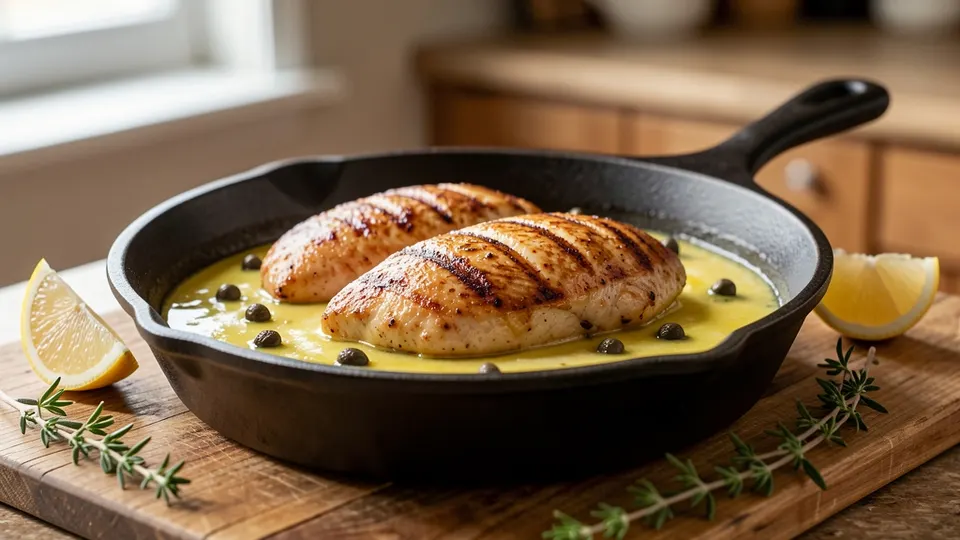
Ask a handful of cooks for the best white wine for cooking and you will hear a handful of favorite bottles. A more useful answer comes from side-by-side kitchen tests, where the same recipe is made with different wines and tasted blind. This page ranks white wine styles by how they behave in the pan, not by how they taste in a glass. You'll see which style came out on top, which dishes change the answer, why two popular grapes often disappoint, and how to shop by style on a small budget without relying on brand names.
How the test was run
America's Test Kitchen (ATK) cooked five recipes with a range of white wines: braised fennel, risotto, a pan sauce, beurre blanc and chicken chasseur 1. That spread covers delicate dishes where the wine has nowhere to hide and a robust braise where other flavors dominate.
The differences between wines showed up most clearly in the gently flavored dishes, risotto and beurre blanc 1. In a long, hearty braise, many wines blur together. That is worth remembering when you choose: the more delicate the dish, the more the style of the bottle matters.
Ranking the best white wine for cooking by style
Here is how the main styles stack up, based on ATK's results and its general advice that a good cooking wine should be bright and balanced, not tannic, sweet or oaky 2.
| Rank | Style | Verdict |
|---|---|---|
| 1 | Sauvignon Blanc | Clean, acidic, reliable in every test dish |
| 2 | Dry vermouth | Close second; slightly sweeter and more herbal |
| 3 | Pinot Grigio, Chenin Blanc, Albariño | Recommended if the bottle is dry |
| 4 | Unoaked Chardonnay | Acceptable; oaked versions turn bitter |
| 5 | Dry sherry | Good in robust braises, too strong for delicate dishes |
| Avoid | Off-dry Riesling, Muscat, oaky Chardonnay, salted cooking wine | Sweetness, bitterness or salt take over |
Dry vermouth earns its high spot partly because it beat all but one of the drinking wines in the same test 1. It also solves the leftover problem, since an opened bottle sits happily in the fridge door between recipes. Each grape has its own guide: Sauvignon Blanc, Pinot Grigio and Chardonnay.
The best pick changes with the dish
Risotto and beurre blanc. These are the dishes where wine choice shows most. Use a clean, dry, unoaked white; Sauvignon Blanc first, dry vermouth second, and leave the sherry out, since its earthy notes dominated both in testing 1. See white wine for risotto for amounts and timing.
Pan sauces for chicken, fish and vegetables. Sauvignon Blanc is the default, but dry vermouth worked fine in every case ATK tried, giving a slightly sweeter, more herbal sauce 3.
Robust braises. In chicken chasseur, a dry sherry held its own and added depth 1. Our dry sherry guide explains which styles to buy.
Chinese stir-fries and braises. When a recipe wants Shaoxing wine, dry sherry or a dry white wine are the usual stand-ins 4.
The full dish-by-dish chart, including soups, seafood and vegetables, is in the cheat sheet.
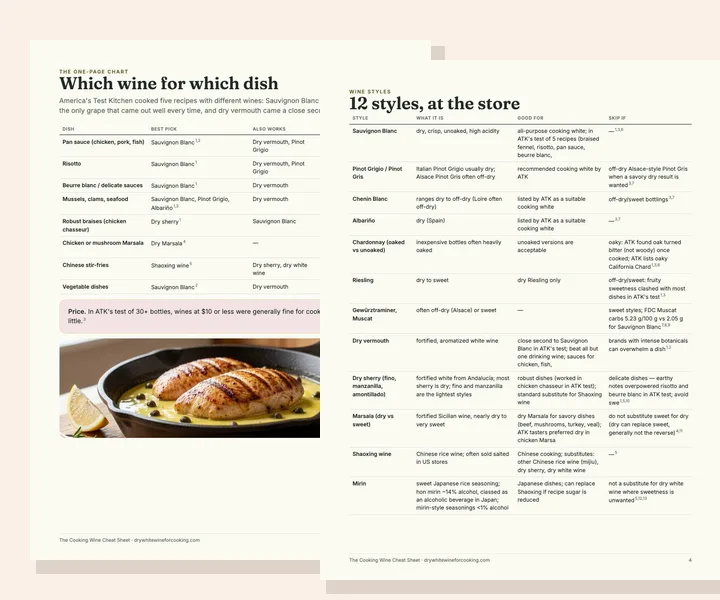
Free printable · 13 pages
Get The Cooking Wine Cheat Sheet
The Cooking Wine Cheat Sheet ranks these styles dish by dish on one printable chart, with a backup pick for when the store is out of your first choice.
- Which wine for which dish, on one page
- 12 wine styles: what to buy, what to skip
- Every substitute with its ratio
- USDA alcohol-left table, storage notes · US Letter and A4
Why oaked Chardonnay and sweet Riesling disappoint
Both grapes can make excellent wine for drinking. The trouble starts when heat concentrates them.
Oak flavor in Chardonnay reads as vanilla or toast in a glass, but ATK found it turned bitter, not woody, once the wine was reduced 1. Because many inexpensive Chardonnays are heavily oaked, grabbing a random cheap bottle is risky. Unoaked Chardonnay, by contrast, cooks acceptably.
Riesling runs from bone dry to very sweet. The off-dry bottles common on US shelves brought a fruity sweetness that clashed with most of ATK's test dishes 2.
USDA figures hint at the difference in the glass: generic Riesling averages 3.74 g of carbohydrate per 100 g, compared with 2.05 g for Sauvignon Blanc 56. A bottle clearly labeled dry Riesling is a different story and can work.
Shopping by style on a budget
Price matters far less than style here (our dry white wine for cooking guide covers what large tastings found about spending). Put your attention on these cues instead:
- Sauvignon Blanc: almost always dry and unoaked, the safest blind buy.
- Pinot Grigio vs Pinot Gris: Italian-style Pinot Grigio is usually dry, while Alsace-style Pinot Gris is often off-dry 7.
- Chardonnay: look for the word "unoaked" on the label.
- Chenin Blanc and Riesling: buy only bottles labeled dry; both grapes range into sweet styles.
- Dry vermouth: pick one with a moderate herbal profile, since brands with intense botanicals can overwhelm a dish 3.
Boxed wine is another budget-friendly route if you cook with wine weekly, because the airtight bag slows spoilage once opened 8.
Reading the wine line in a recipe
Recipes rarely explain what they mean by wine, so here is how to translate the usual wording.
"White wine" or "dry white wine." Treat both the same: a crisp, unoaked dry white. Very few savory recipes want sweetness, and the ones that do usually say so.
A named grape. If the recipe names Sauvignon Blanc or Pinot Grigio, any dry white from the ranking above will stand in. If it names Chardonnay, an unoaked bottle keeps the intent without the bitterness.
"Cooking wine." Older recipes sometimes call for the salted supermarket product. Use a regular dry white instead and taste before adding salt, since the recipe may have counted on the salt in the bottle; cooking wine vs regular wine has the sodium numbers.
"Dry sherry" or "vermouth." These are deliberate choices for flavor, so swap in a dry white only if you have nothing else.
Do grapes differ in alcohol or calories?
Not by much among dry whites. USDA data per 100 g put Sauvignon Blanc at 81 kcal and 10.5 g alcohol, and Pinot Grigio at 83 kcal and 10.7 g alcohol 69. Those gaps are too small to matter in a sauce that uses a modest pour of wine. Flavor style, not nutrition, should drive your choice.
Alcohol content does matter if you are cooking for someone who avoids it. Simmering removes some alcohol but never all of it; our page on whether alcohol cooks off explains the USDA retention numbers, and the substitutes guide lists alcohol-free options. What "dry" means on a label is explained in the dry white wine for cooking guide.
Frequently asked questions
What are the main differences between Pinot Grigio, Sauvignon Blanc, and Chardonnay?
Sauvignon Blanc is crisp, high in acid and nearly always unoaked, which is why it tested best for cooking 1. Pinot Grigio is lighter and more neutral when made in the dry Italian style. Chardonnay varies most: unoaked versions cook fine, but oaked ones can turn bitter when reduced. For cooking, the oak question matters more than the grape.
What are the 7 types of white wine?
There is no official list of seven. For cooking, the styles worth knowing are Sauvignon Blanc, Pinot Grigio, Chardonnay, Chenin Blanc, Albariño, Riesling and Muscat. The first five can be dry and cook well; Riesling and Muscat are often sweet, and Muscat carries about 5.23 g of carbohydrate per 100 g in USDA data 10. Check for "dry" on those labels.
What are the top 3 white wines?
For cooking, the top three in America's Test Kitchen's results were Sauvignon Blanc first and dry vermouth a close second 1, followed by dry Pinot Grigio, Chenin Blanc or Albariño, which ATK also recommends 2. For drinking, the top three is a matter of taste, so this site sticks to how wines behave in the pan.
What's a really nice bottle of white wine?
For cooking, a nice bottle is a modest one. America's Test Kitchen found that wines at $10 or less are generally fine in recipes and that much more expensive bottles gave minimal benefit 11. A crisp, dry, unoaked white in that range will do more for a sauce than a pricey oaky or sweet wine.
Sources
- America's Test Kitchen / Cook's Illustrated: What's the best white wine for cooking?
- America's Test Kitchen / Cook's Illustrated: The best wine for cooking is not what you think
- America's Test Kitchen / Cook's Country: Substituting vermouth for white wine in cooking
- The Woks of Life: Substitutions for Shaoxing wine
- USDA FoodData Central (SR Legacy), 2019: Alcoholic beverage, wine, table, white, Riesling (FDC ID 173200)
- USDA FoodData Central (SR Legacy), 2019: Alcoholic beverage, wine, table, white, Sauvignon Blanc (FDC ID 173201)
- Wine Folly: Wines from dry to sweet (chart)
- America's Test Kitchen: Cooking with wine (how-to 5706)
- USDA FoodData Central (SR Legacy), 2019: Alcoholic beverage, wine, table, white, Pinot Gris (Grigio) (FDC ID 174841)
- USDA FoodData Central (SR Legacy), 2019: Alcoholic beverage, wine, table, white, Muscat (FDC ID 174849)
- America's Test Kitchen / Cook's Country: Cooking with wine (how-to 5887)