Cooking with wine
Dry Sherry for Cooking: What to Buy and How to Use It
By the editorial team · Updated 2026-11-25 · Every number linked to its source
Quick answer. For cooking, buy a real dry sherry such as fino or manzanilla, not salted "cooking sherry". Dry sherry suits robust dishes and is a standard stand-in for Shaoxing wine 9, while a store-brand cooking sherry carries about 190 mg of sodium per 2 Tbsp 6.
White wine substitute calculator
Not sure what to use when a recipe asks for dry sherry or Shaoxing? The substitute calculator suggests a swap and the amount for your recipe.
Want it on paper? The Cooking Wine Cheat Sheet has every dish, wine style and substitute on printable pages.
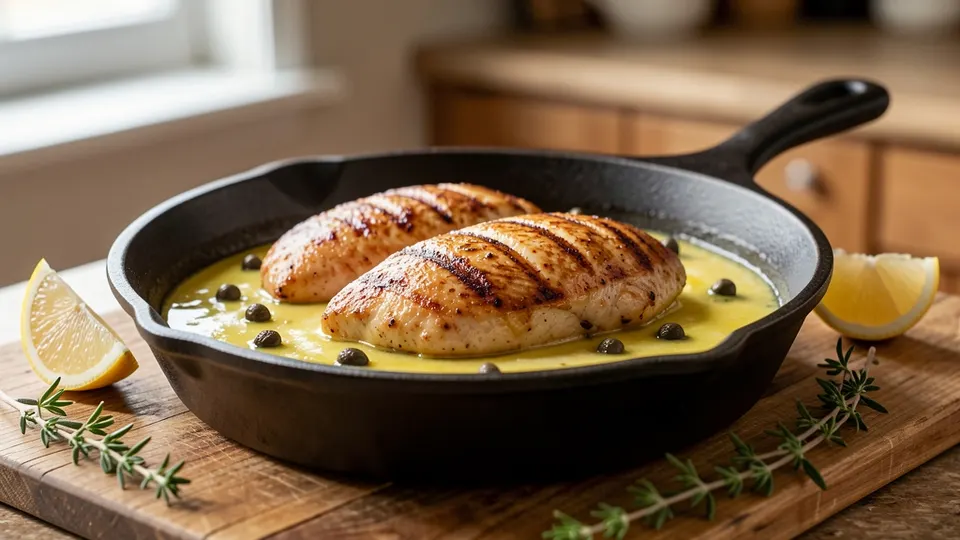
Dry sherry for cooking shows up in French onion soup, creamy mushroom sauces, stir-fries and holiday gravy. The trouble is the shelf: next to the real sherry you'll usually find a bottle labeled "cooking sherry", and the two are not the same product.
Below we explain what dry sherry is, how it differs from salted cooking sherry, where it works and where it doesn't, and what to reach for instead. Everything here is drawn from the sources listed at the bottom; where our sources didn't answer a question, we say so.
What is dry sherry?
Sherry is a fortified white wine from Andalucía in southern Spain, and most sherry is dry, according to Wine Folly 5. The driest, lightest styles are fino and manzanilla. Amontillado is also a dry style, with more depth.
The sweet styles are the ones to keep out of savory cooking. Cream sherry and Pedro Ximénez (PX) are sweet 5, and they'll push a pan sauce or soup toward dessert.
So when a recipe says "dry sherry", it means a fino, manzanilla or amontillado from the wine aisle, not cream sherry, and not the salted bottle by the vinegar.
When you shop, look for the style name on the label. If a bottle only says "sherry" with no style, read the back label for words like dry or sweet before buying it for a savory recipe.
Dry sherry for cooking vs cooking sherry
"Cooking sherry" is salted wine sold as a grocery item. One store-brand sherry cooking wine logged by USDA packs 633 mg of sodium per 100 ml, close to 190 mg for every 2 Tbsp, with potassium sorbate and potassium metabisulfite as preservatives 6.
That salt is there by design. The federal standard for salted nonbeverage wine sets a floor of 1.5 g of salt per 100 ml, enough to make it unfit to drink 7. In the pan, it means the sherry seasons the dish whether you want it to or not.
Real dry sherry has no added salt, a cleaner flavor and better control over seasoning. If you only have cooking sherry, cut the recipe's salt and taste before adding more. More on salted bottles in cooking wine vs regular wine.
Where dry sherry works, and where it doesn't
Dry sherry shines in hearty, savory dishes. In America's Test Kitchen's five-recipe test of cooking wines, sherry did well in chicken chasseur, a robust braise 8.
It's less suited to delicate dishes. In the same test, sherry's earthy notes overpowered risotto and beurre blanc 8. For those, a crisp dry white wine is the better pick; see white wine for risotto.
A useful way to think about it: if the recipe already has strong flavors such as mushrooms, onions, soy or long-cooked meat, dry sherry fits. If the main event is butter, cream or rice, use a neutral dry white instead.
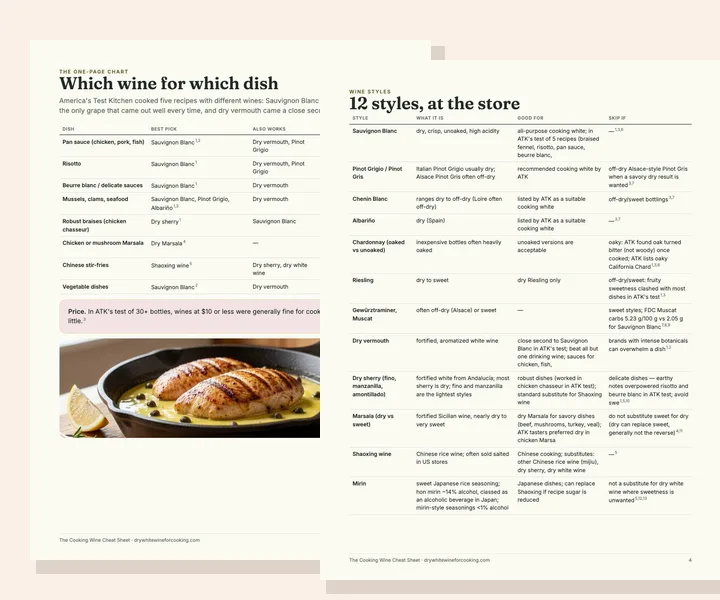
Free printable · 13 pages
Get The Cooking Wine Cheat Sheet
Download the Cooking Wine Cheat Sheet for the fortified wine column: which dishes get dry sherry, vermouth or Marsala, and how long each keeps open.
- Which wine for which dish, on one page
- 12 wine styles: what to buy, what to skip
- Every substitute with its ratio
- USDA alcohol-left table, storage notes · US Letter and A4
Dry sherry and Shaoxing wine
Shaoxing is a Chinese rice wine used across Chinese cooking, and in US stores it's often sold salted 9. They aren't the same drink, but dry sherry is a standard substitute for it.
The Woks of Life names dry sherry as a go-to replacement for Shaoxing, alongside mijiu (another Chinese rice wine) and a dry white, plus mirin if you reduce the recipe's sugar 9. Our sources disagree on the exact ratio, from equal amounts to half as much, so start with less sherry than the recipe calls for and taste.
Mirin isn't a stand-in for dry sherry in Western dishes. It's a sweet Japanese seasoning; hon mirin is about 14% alcohol, while mirin-style seasonings are under 1% 10.
How to cook with dry sherry
Most recipes use dry sherry in one of three ways, and each affects flavor and alcohol differently.
To deglaze. After browning meat or mushrooms, pour a splash of sherry into the hot pan and scrape up the browned bits. Let it reduce before adding other liquid.
In the simmer. In soups, stews and braises, sherry added early mellows into the background. A longer simmer leaves less alcohol: the USDA table drops from 40% retained at 15 minutes to 25% at one hour 11.
As a finish. A spoonful stirred into soup or a cream sauce just before serving gives the most distinct sherry aroma. It also keeps the most alcohol, about 85% for anything stirred into hot liquid and taken off the heat 11. Our page on whether alcohol cooks off explains the full table.
Dry sherry substitutes
No source we checked tested replacements for dry sherry specifically, so these come from tests of white wine swaps generally. Use judgment and taste as you go.
Dry white wine. In delicate dishes it's often the better choice anyway. A dry, unoaked white like Sauvignon Blanc did best across ATK's cooking test 8.
Dry vermouth. Another fortified wine, and ATK found it worked in sauces for chicken, fish and vegetables, with a gentle sweetness and herbal note 3. Strongly botanical brands can overwhelm a dish.
Dry Marsala. Also fortified and nutty. ATK tasters preferred dry Marsala in savory dishes, and dry can stand in for sweet but generally not the reverse 12.
Without alcohol. Broth plus 1 tsp wine vinegar or lemon juice per 1/2 cup is ATK's general wine swap 1. See substitutes for white wine in cooking for more.
Storing an opened bottle
Fortified wines keep longer than table wine once opened. Wine Folly gives 28 days in the fridge for opened fortified wines such as sherry 13. Our guide on how long opened wine lasts for cooking covers other bottles.
Frequently asked questions
What is the difference between dry sherry and cooking sherry?
Dry sherry is real fortified wine from Spain, such as fino or manzanilla, with no added salt. Cooking sherry is salted to make it unfit to drink; one store brand lists about 190 mg of sodium per 2 Tbsp plus preservatives 6. Dry sherry gives you cleaner flavor and control over the dish's seasoning.
What is the best dry sherry for French onion soup?
We didn't find a tested recommendation for French onion soup specifically. What our sources support: use a real dry style such as fino, manzanilla or amontillado, not sweet cream sherry 5, and skip salted cooking sherry so the soup's salt stays under your control. Onion soup is robust, the kind of dish where sherry tends to fit.
What wines are dry sherry?
Dry sherry styles include fino and manzanilla, the lightest, and amontillado, which is richer. Wine Folly notes that most sherry is dry 5. The sweet styles are cream sherry and Pedro Ximénez, and those aren't what a savory recipe means when it asks for dry sherry.
Is Shaoxing wine the same as sherry?
No. Shaoxing is a Chinese rice wine and sherry is a fortified grape wine from Spain. They play a similar role in cooking, though, and dry sherry is a common substitute for Shaoxing, along with a different Chinese rice wine or a dry white 9. Sources disagree on the ratio, so start with less and taste.
Can you buy Shaoxing wine at the grocery store?
Often, yes, but check the label before you buy. The Woks of Life notes that Shaoxing in US stores is often sold salted 9, which adds sodium to your dish. If you use a salted bottle, reduce the soy sauce or salt in the recipe slightly and taste before serving.
Sources
- Cook's Illustrated / America's Test Kitchen: How to substitute for wine
- Healthline (Brianna Elliott, RD), 2017: 11 non-alcoholic substitutes for wine (cooking)
- America's Test Kitchen / Cook's Country: Substituting vermouth for white wine in cooking
- RecipeTips: Verjus (glossary)
- Wine Folly: Sherry: the dry wine that everyone should love
- USDA FoodData Central (Branded Foods, brand owner Target Stores), 2019: Sherry Cooking Wine (FDC ID 485268)
- US eCFR / Cornell LII (TTB regulation), 2025: 27 CFR 24.215 — Production of nonbeverage wine and wine products
- America's Test Kitchen / Cook's Illustrated: What's the best white wine for cooking?
- The Woks of Life: Substitutions for Shaoxing wine
- Kikkoman Corporation: Glossary — Seasonings: Mirin
- USDA Agricultural Research Service, Nutrient Data Laboratory, 2007: USDA Table of Nutrient Retention Factors, Release 6
- America's Test Kitchen / Cook's Illustrated: Are sweet and dry Marsala interchangeable?
- Wine Folly: How long does an open bottle of wine last?